Challenge
Flanders faces highly fragmented natural areas, among which roads that cut through habitats. Animals cross a road on average every 400 meters, resulting in around 5 million wildlife casualties each year. At present, there are only nine ecoducts reconnecting natural areas. These are large, concrete structures that require long construction periods.
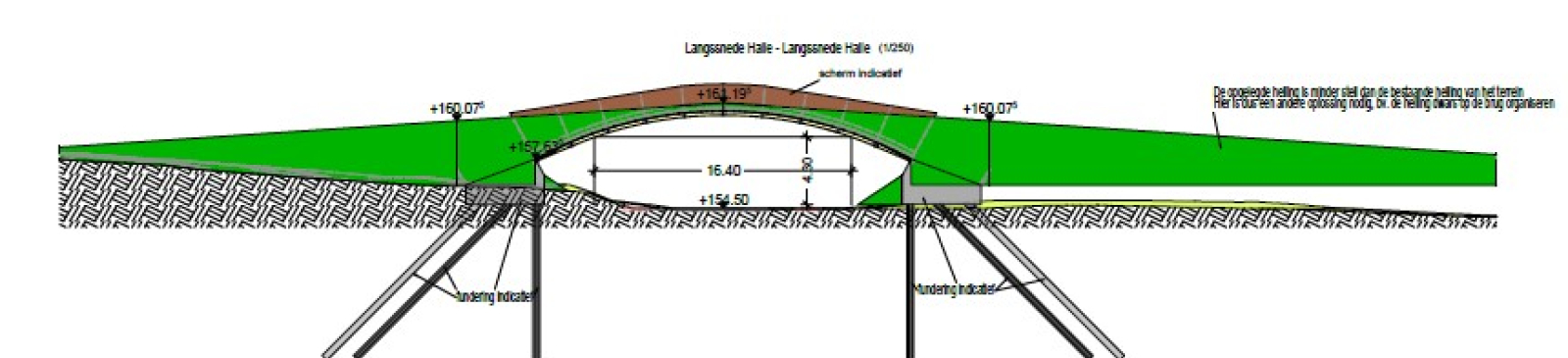
The applicants aim to develop an innovative alternative for local and regional roads: a modular, industrially manufactured ecoduct, built from standardized segments produced off-site and quickly assembled on location, similar to a “Meccano” system. This approach not only reduces costs and traffic disruption but also makes the ecoduct flexibly deployable, for example as a bridge for recreational users or as temporary infrastructure.
With support from PIO, the existing concept design will be further developed and tested in a pilot project in Halle, more specifically along the Nijvelsesteenweg between the Hallerbos and Lembeekbos. Through intensive monitoring, technical, ecological, and economic aspects will be evaluated. The goal is to create a scalable system that can be applied at multiple locations and thus sustainably contribute to improved ecological connectivity in Flanders and beyond.
The project consortium consists of the National Park Brabantse Wouden (project lead), the City of Halle, the Department of Environment (DOMG), Minister Ben Weyts, the Department of Mobility and Public Works (MOW), De Werkvennootschap, the Agency for Nature and Forest (ANB), Team Flemish Government Architect, consultancy firm B.A.S., the Province of Flemish Brabant, Natuurpunt vzw, Natuurpunt Halle, the Regional Landscape Pajottenland & Zennevallei, and Plan Boommarter.